Late summer and early fall bring an increased risk of tropical storms, hurricanes and severe weather across North Carolina. Homeowners often prepare by securing outdoor items, charging devices and stocking emergency supplies, but it is also important to protect the systems that keep a home safe and comfortable.
Before a major storm arrives, inspect the area around your outdoor HVAC unit. Remove branches, lawn furniture, tools and other loose objects that could become airborne and damage the equipment. Avoid covering the unit with a tarp while it is operating because restricted airflow can cause serious problems. Any protective cover should only be used after the system has been turned off.
When strong winds, flooding or repeated power interruptions are expected, consider turning the HVAC system off at the thermostat. This can help protect sensitive electrical components from power surges and rapid cycling as electricity goes on and off. During an outage, avoid repeatedly adjusting the thermostat or attempting to restart the system.
Once power returns, allow the electrical supply time to stabilize before turning the HVAC system back on. First, check the outdoor unit for branches, standing water, shifted equipment, damaged panels or exposed wiring. If the system was exposed to floodwater, do not operate it until it has been inspected by a professional.
After restarting the system, pay attention to unusual sounds, odors or performance issues. The air conditioner should begin cooling normally without loud buzzing, grinding or repeated shutdowns. A whole-home surge protector may provide additional protection from the electrical fluctuations that often accompany severe storms.
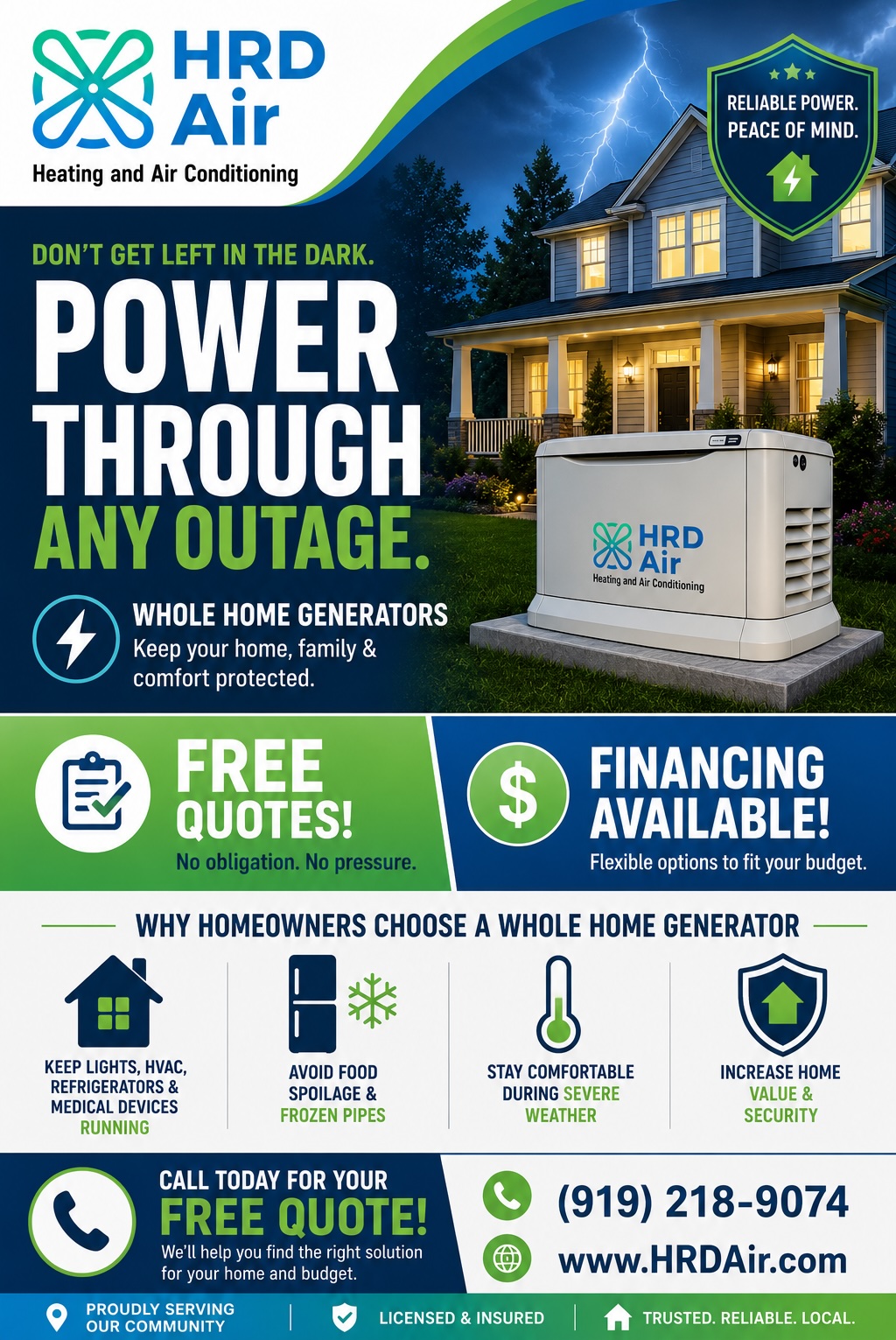
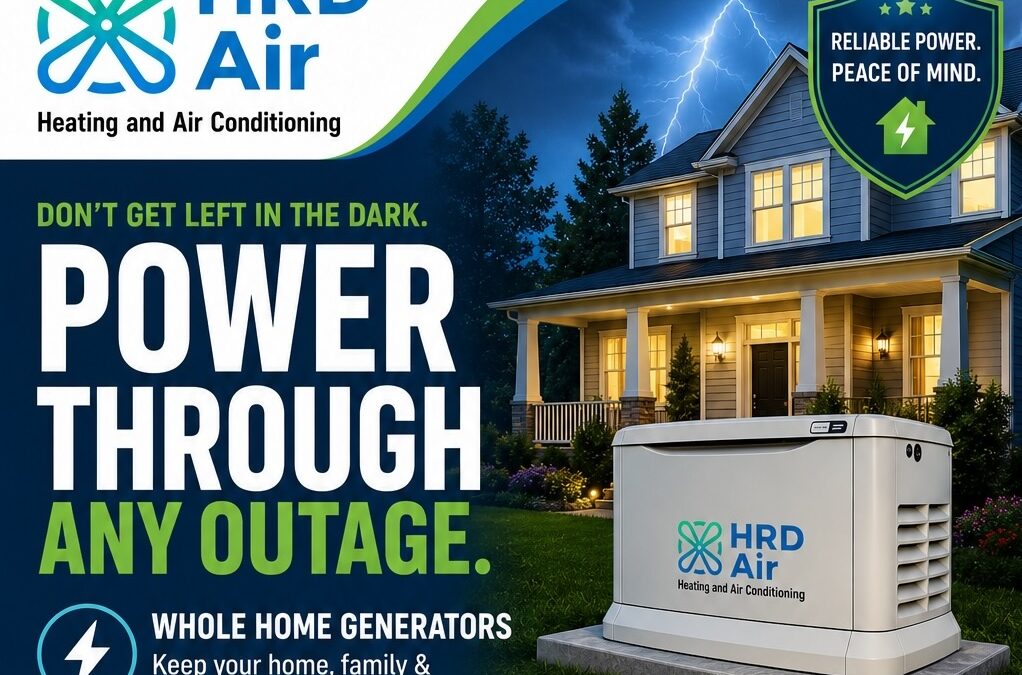
For homeowners who want greater protection during prolonged outages, a whole-home generator can provide reliable backup power when the electrical grid goes down. Depending on the generator’s size and configuration, it may help keep essential systems such as lights, refrigerators, medical devices and portions of the home’s HVAC equipment running.
That can make a significant difference during severe North Carolina weather. A generator may help prevent food spoilage, protect against frozen pipes during colder outages and allow the home to remain more comfortable until utility service is restored. It can also provide added security and potentially increase the home’s long-term value.
HRD Air offers whole-home generator solutions with free, no-obligation quotes and financing options available. The team can help homeowners evaluate their power needs, budget and equipment options to find an appropriate solution.
Preparing before severe weather arrives can protect your HVAC investment and give your family greater peace of mind. Contact HRD Air at 919-218-9074 to schedule HVAC service or request a free quote for a whole-home generator.